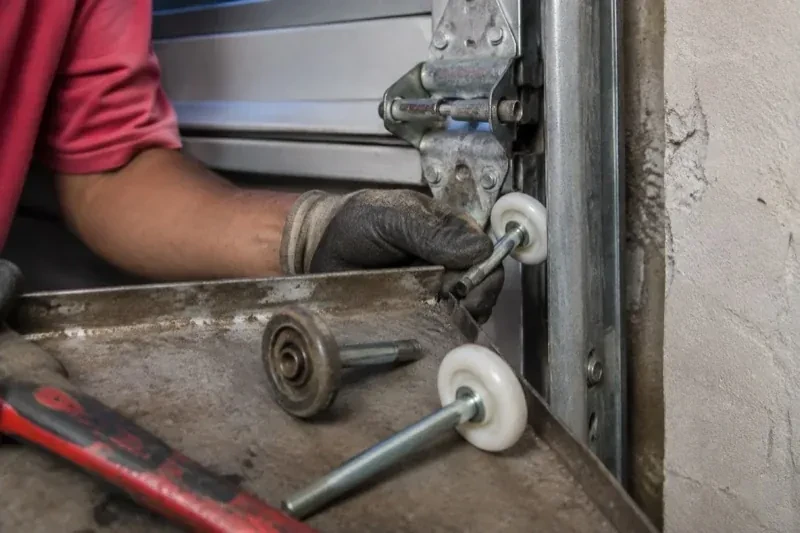
Sound familiar?East Gwillimbury
- The call
- Open the door by hand and it drifts back down on its own, a little at first and then all at once. Nothing is broken that you can see, but the springs along the tracks look tired, rusty and slightly sagging.
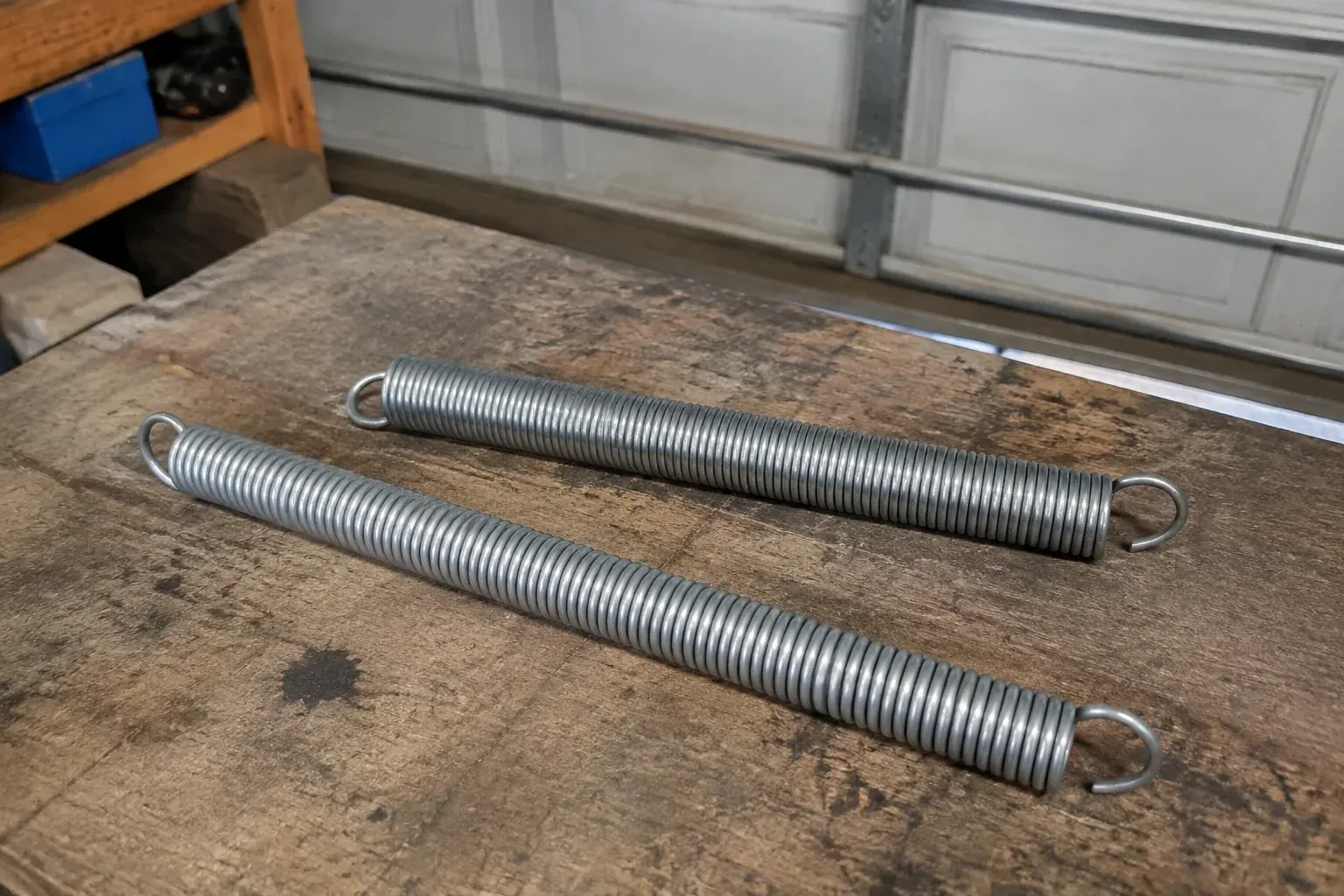
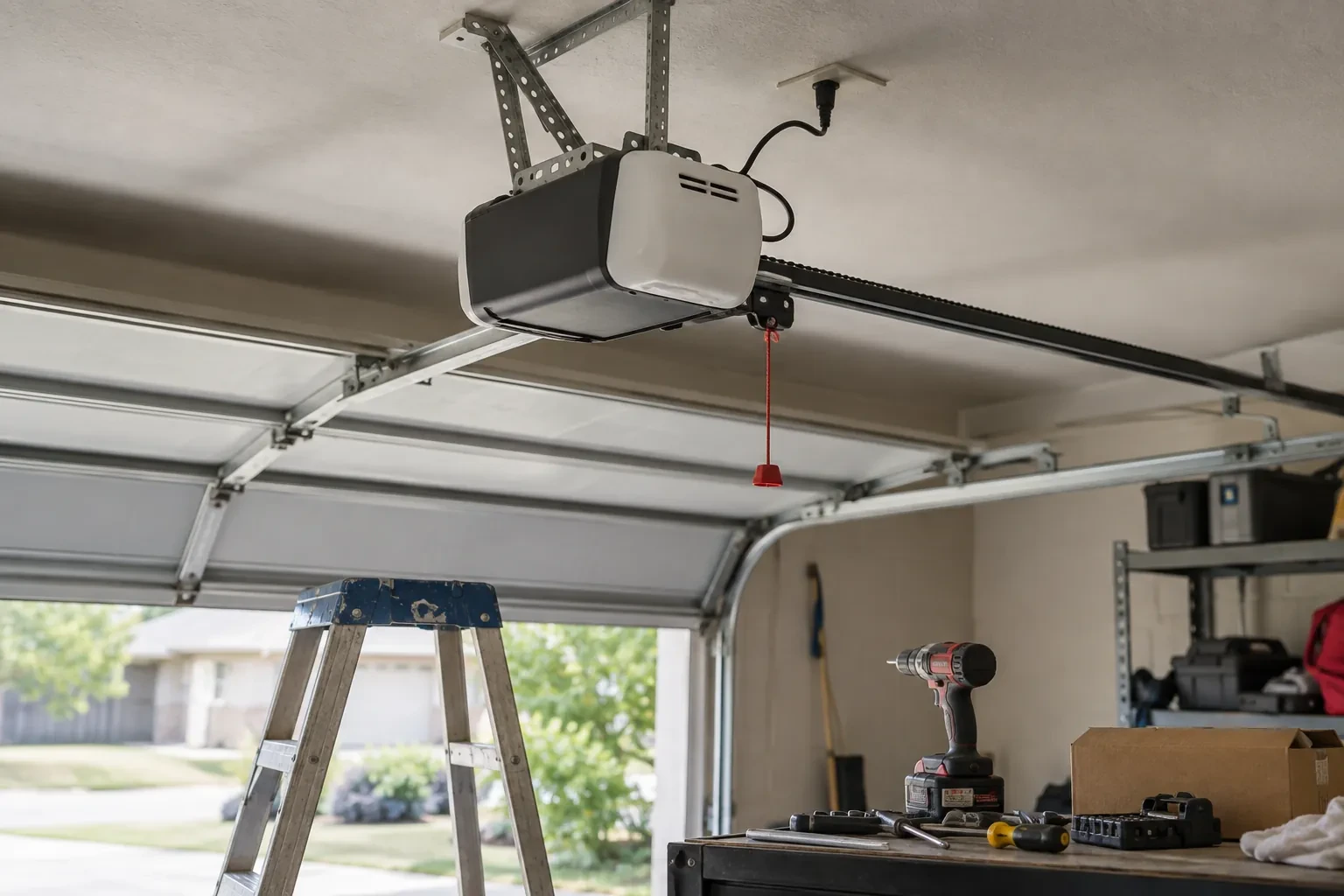
You pulled the red cord to open the door during a power cut and it barely moved. Lifting it took your whole weight, and when you let go it came down hard.
Every extension spring should carry a containment cable, and replacement is the moment to make sure yours do. A containment cable runs through the centre of the spring and is anchored at both ends, to the rear hanger and to the bracket at the front of the track. It does no lifting; its purpose is to hold a spring that breaks so the pieces stay on the cable. Many older doors predate this practice, which a home inspection checklist checks for. When springs are replaced, new containment cables are fitted with them, which keeps a broken spring's pieces contained, not the door's weight, balance or safety.
Sound familiar?East Gwillimbury
Extension Spring Replacement · East Gwillimbury
Scene 1
Even when only one spring has snapped, both are read closely. The technician looks for gaps opening between coils with the door up, which means the wire has stretched and lost its pull; rust pitting and scale, especially where the spring sits nearest the back wall; a spring hanging visibly longer or lower than its partner; and end loops that have opened or cracked. The two are compared for length, coil diameter and wire size, because springs of different ratings are sometimes found on the same door after a past repair. Whatever is found, the outcome is the same, a new matched pair, but the reading tells the technician what rating the door really needs.
Scene 2
With the door open and clamped, each old spring is nearly slack, and removal is straightforward. The technician unhooks the lift cable from its S-hook or clip at the front, which lets the spring's pulley end drop free, then lifts the rear loop off the hanger. The old containment cable is unclipped from its anchors and pulled out of the coil. On a door with a broken spring, the two halves are gathered and the containment cable, if there was one, is inspected for the marks of having done its job. Everything that comes down is laid out on the floor so the old spring can be measured against its replacement and you can see the wear.
Scene 3
A standard extension spring is made for a set number of open-and-close cycles, commonly in the ten-thousand range, which on a door used four times a day works out to several years and on a door used twice a week to much longer. Springs age even when idle, as rust does its slow work in an unheated garage. The signs that the set is nearing the end are gradual: the door feels heavier by hand, the opener sounds as if it is working, the door drifts down from halfway, and gaps appear between coils when the door is open. Acting on those signs turns the next replacement into a planned appointment rather than a bang in the night.
What shapes the quoteEast Gwillimbury Garage Door Services
FeesSame any hour
Usually, yes. A door that rises from the floor or from halfway without help has springs pulling harder than the door weighs, which happens when a heavier-rated pair was fitted, when the hooks were set with too much stretch, or when a door has been made lighter by a panel change. It also puts strain on the opener, which has to hold the door down. Weighing the door and fitting the correct rating, set evenly, settles it.
Yes. The last steps of the visit are the balance test by hand, several full cycles under power and the opener's reversal checks, so the door is ready for normal use when the technician leaves. New springs need no settling period. It is worth running it yourself once or twice while the technician is still there, so you know what a properly balanced door sounds and feels like from now on.
No need, and it is easier on the door if you leave it. With a spring broken or slack, the door is unbalanced and heavy, and lifting it can let it drop or twist a section in the track. If the door is stuck partway, leave it there and keep people and the car away from the opening. The technician brings clamps and props, and the door is secured before it is moved at all.
YorkOntario
Extension Spring Replacement · Brown Hill, Holland Landing, Mount Albert, Queensville, River Drive Park, Sharon
Every square is one home in a hundred.
On-site assessment
You pulled the red cord to open the door during a power cut and it barely moved.
(365) 510-2001, open 24/7.
On-site assessment preferred · (365) 510-2001, open 24/7