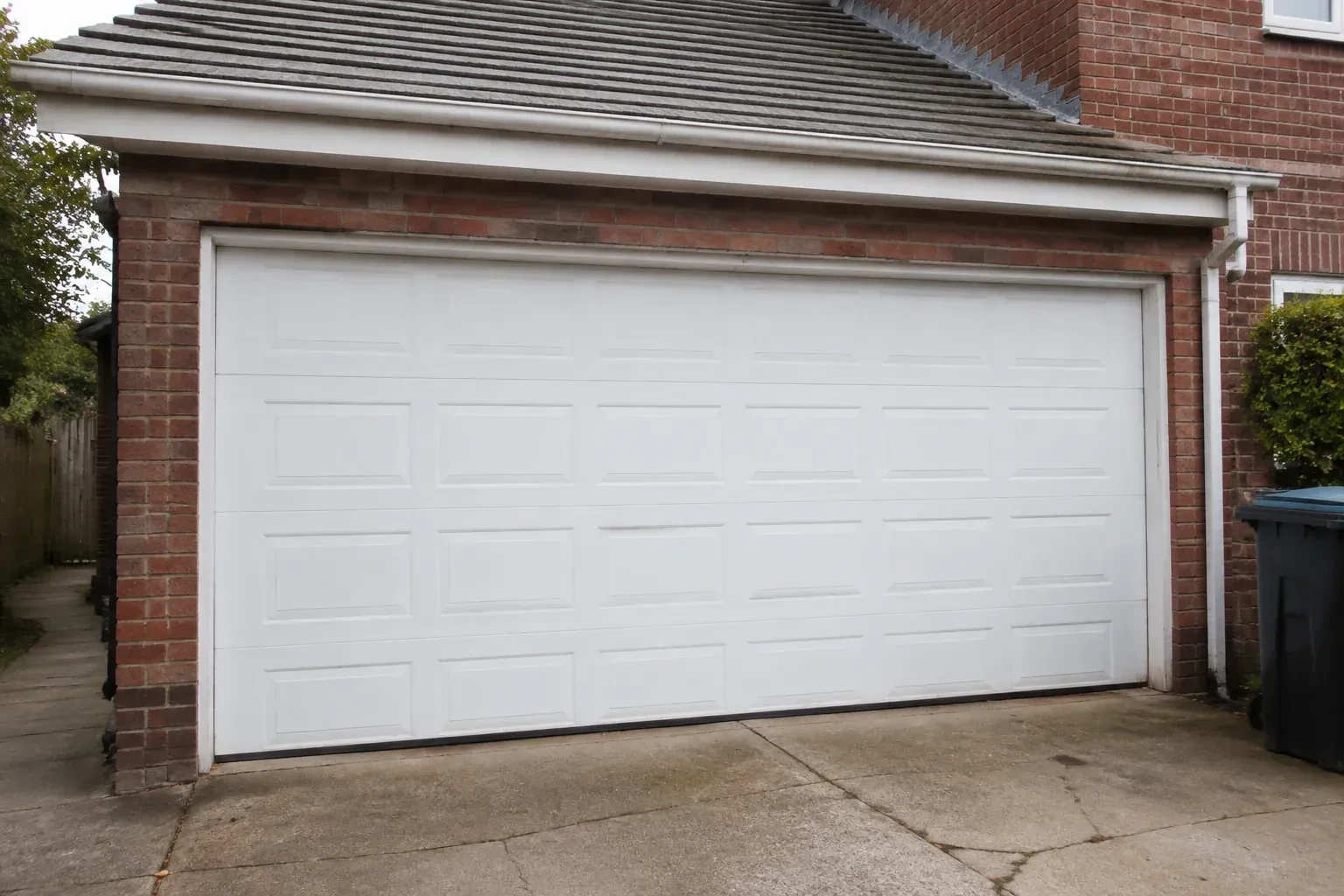
Garage Doors in East Gwillimbury, OntarioLet the light into the garage.
Full-view aluminum and glass doors turn a garage into a bright studio, gym or showroom. We help you pick the glass type and frame finish, check the opening and header, and install the door so the panelstrack evenly and seal well.
Garage doors here live through freeze-thaw cycles, road salt and humid summers, and they wear accordingly. We look at the spots those conditions attack first: the bottom seal, the cables at the bottom bracket, the roller bearings and the lubrication on the springs. Servicing a door for the climate it lives in is what keeps it running through February.
Told before touched. Nothing is adjusted or replaced until you have heard what we found and agreed with the plan for it.
Neat work, neat exit. New parts fitted cleanly, old ones removed, the floor and door wiped down. The garage is yours again the moment we leave.
Room to choose. We give you the practical picture and step back. Repair now, plan a replacement, or wait and watch: your call.
Open 24/7, same fees any hour. Get a quote on a new door
16 years in business · Send us a message: (365) 510-2001
Garage door spring replacement
Repairs and new doors
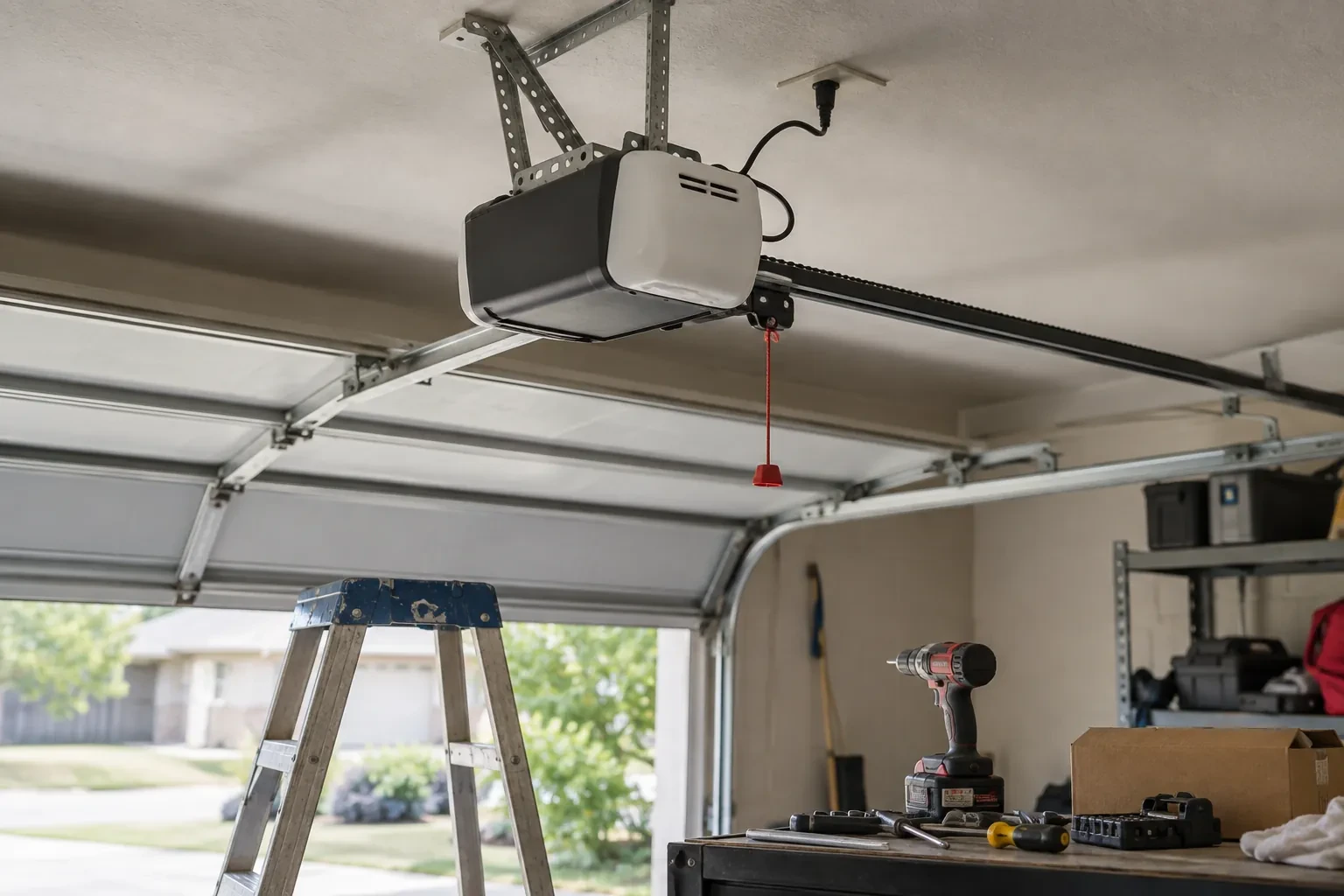
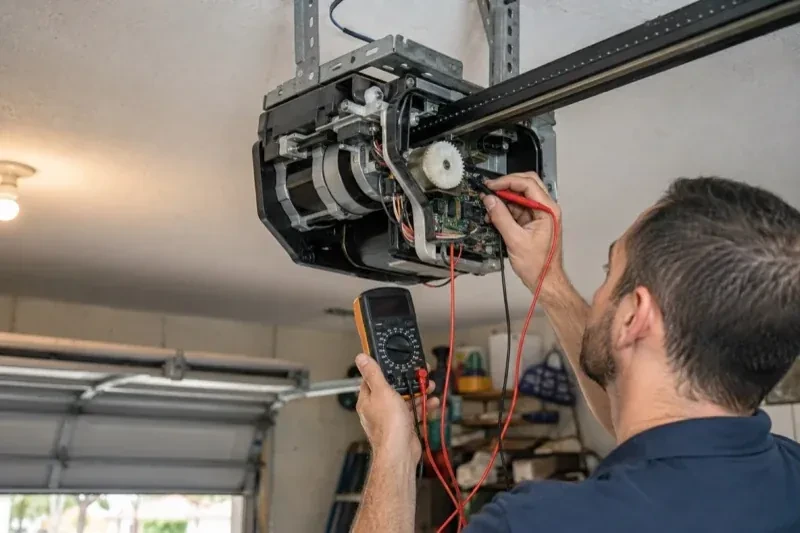
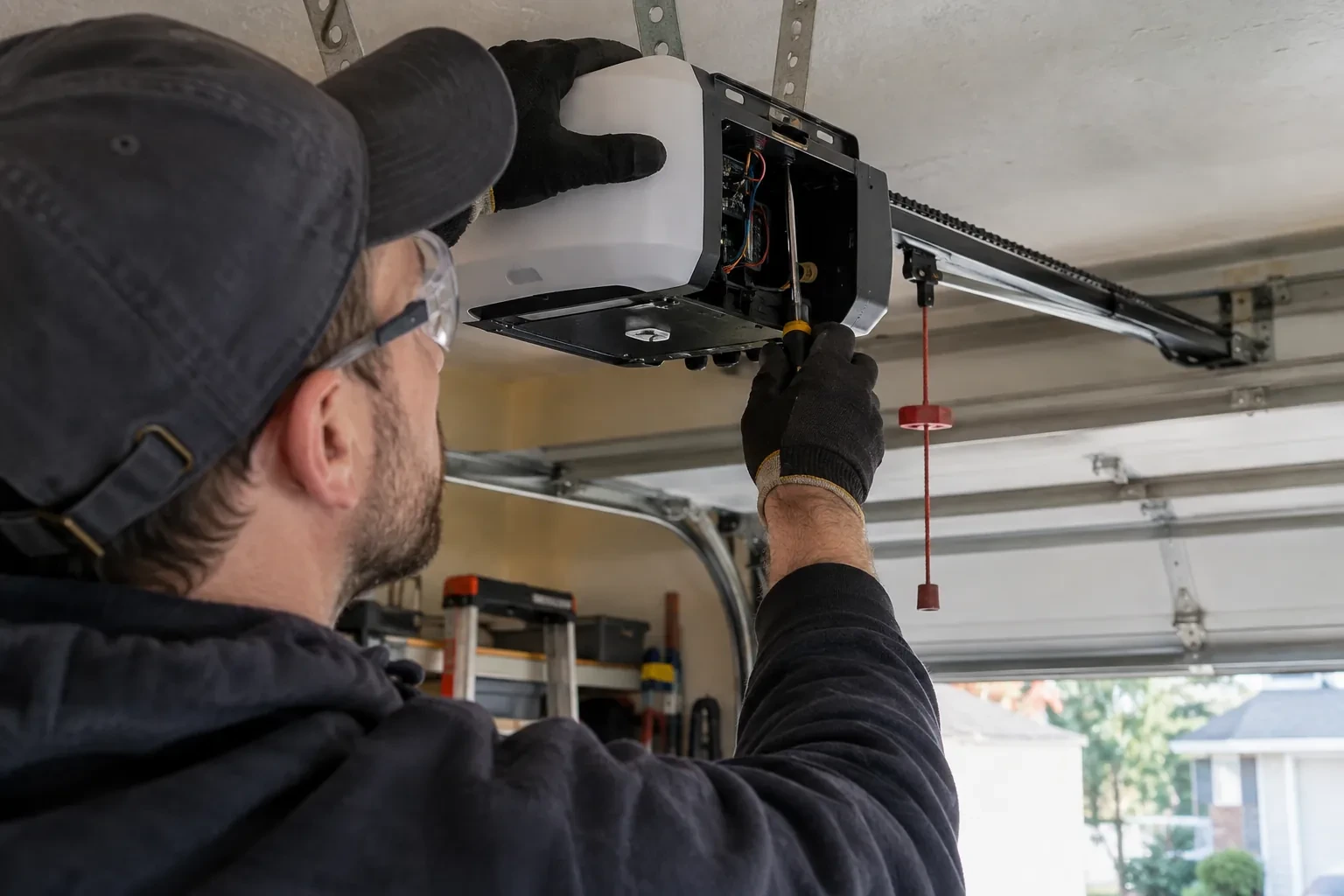
The opener is the part people notice, but the door does the heavy lifting. We keep both healthy: motor and logic board on one side, springs, cables and balance on the other, so neither one is fighting the other.
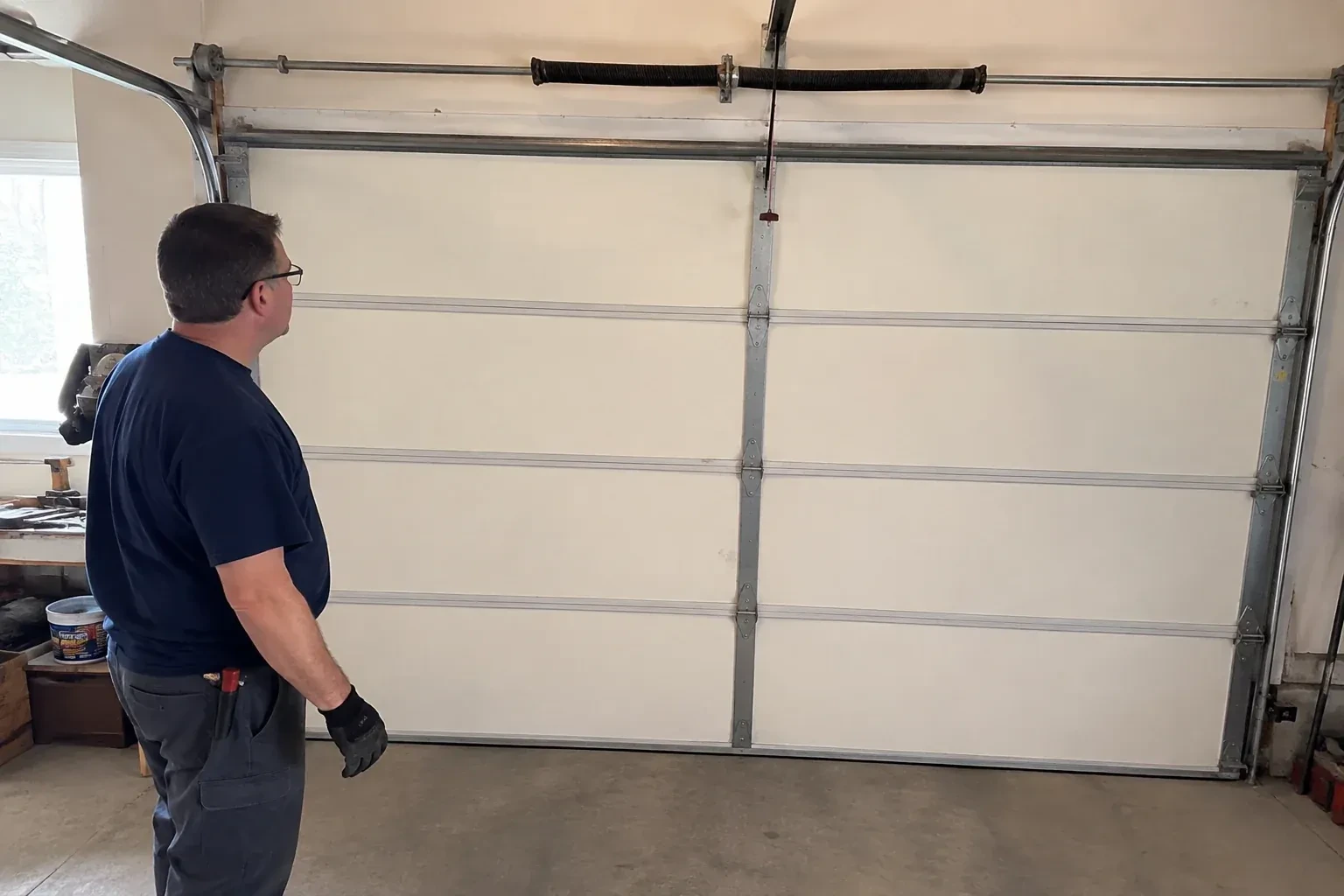
Springs & HardwareIf the door dropped suddenly, hangs crooked, or needs real effort to lift by hand, the spring and cable…
Springs & Hardware
If the door dropped suddenly, hangs crooked, or needs real effort to lift by hand, the spring and cable…
The largest moving part of your home. Worth a closer look.
A garage door belongs to the architecture. Its movement belongs to your everyday life. We bring both into the conversation.
Job sheet1 of 3
Garage Door Tune-Up
The call
On windy nights the door rattles in its frame, there is a line of daylight along one side, and the bottom seal has gone hard and flat. Leaves and fine snow drift in underneath and the garage never seems to hold its temperature.
Every morning the door announces itself: a rattle on the way up, a grinding squeal on the way down, loud enough that the neighbours know when you leave. A spray of lubricant settled it for a day or two, then the racket came back.
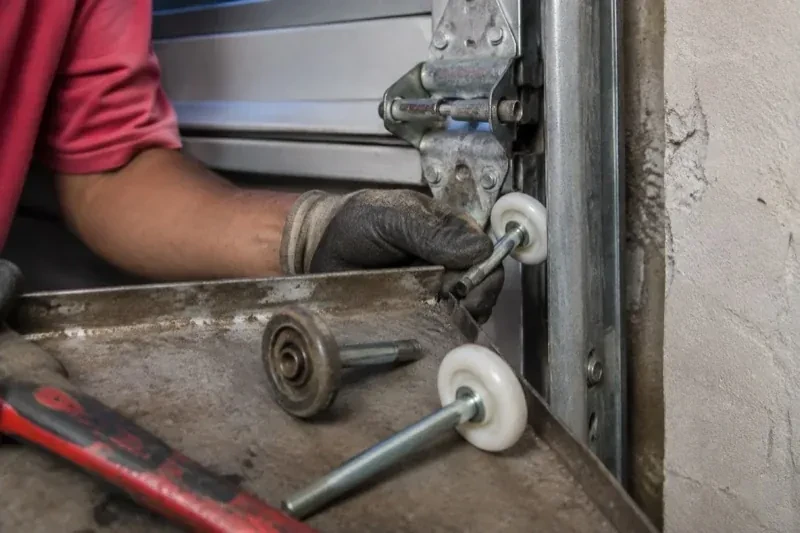
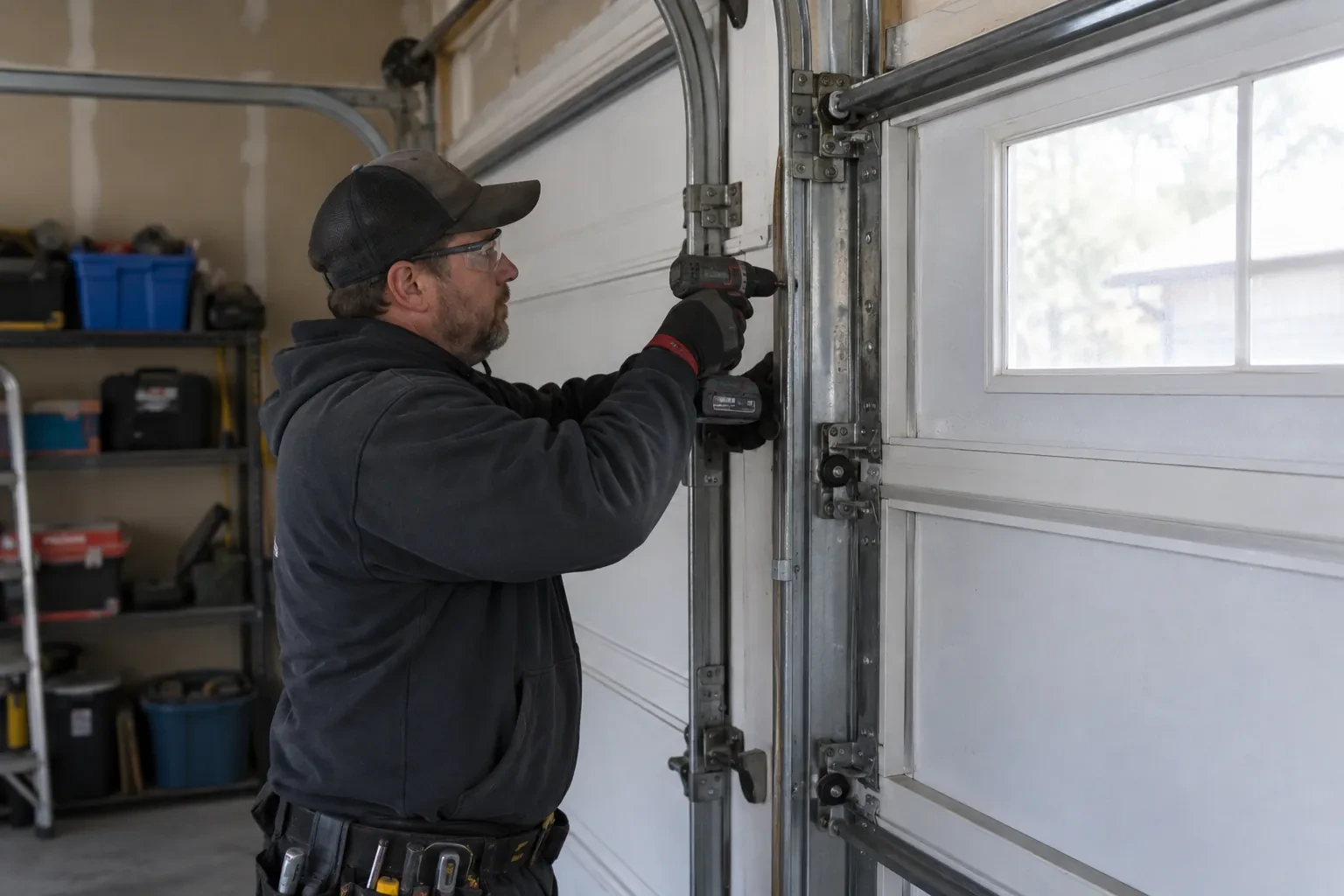
The rollers on the door have been squealing for months. Today one of them simply fell out of the track at the curve, its wheel worn down to the stem, and the top section sagged sideways as the door opened.
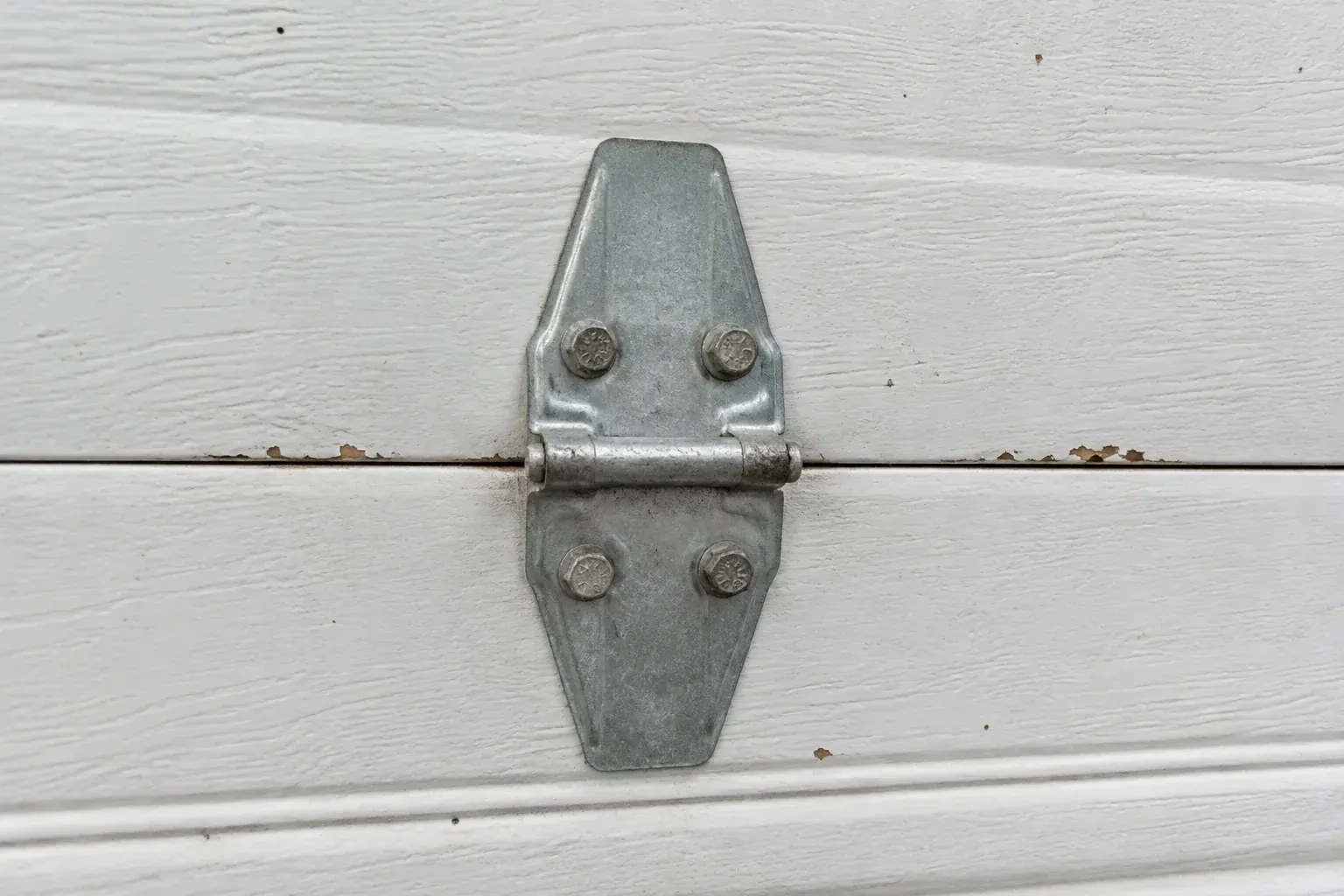
If the door dropped suddenly, hangs crooked, or needs real effort to lift by hand, the spring and cable system is where we look first. These services put it right.
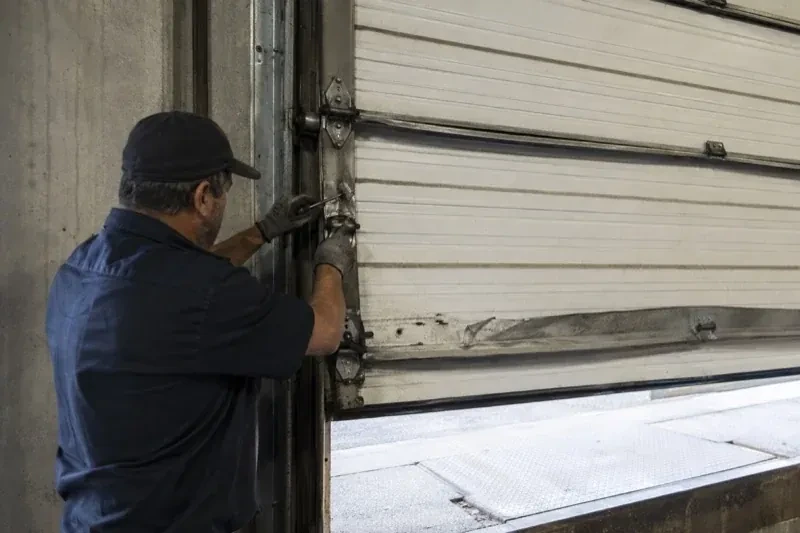
After an overnight freeze the door stuck to the slab, the opener strained, and something gave. The bottom section is bowed inward, one hinge has torn free of its screws, and the rubber seal along the bottom no longer sits flat.
You heard a sharp bang from the garage, and now the opener hums for a second and gives up. The door lifts a few centimetres at most, then settles back down as if something very heavy is holding it in place.
After years of slushy winters the cables look thinner near the bottom brackets, with rust streaks running down the door where they attach. The door still works, but the frayed wires catch your glove when you brush past.
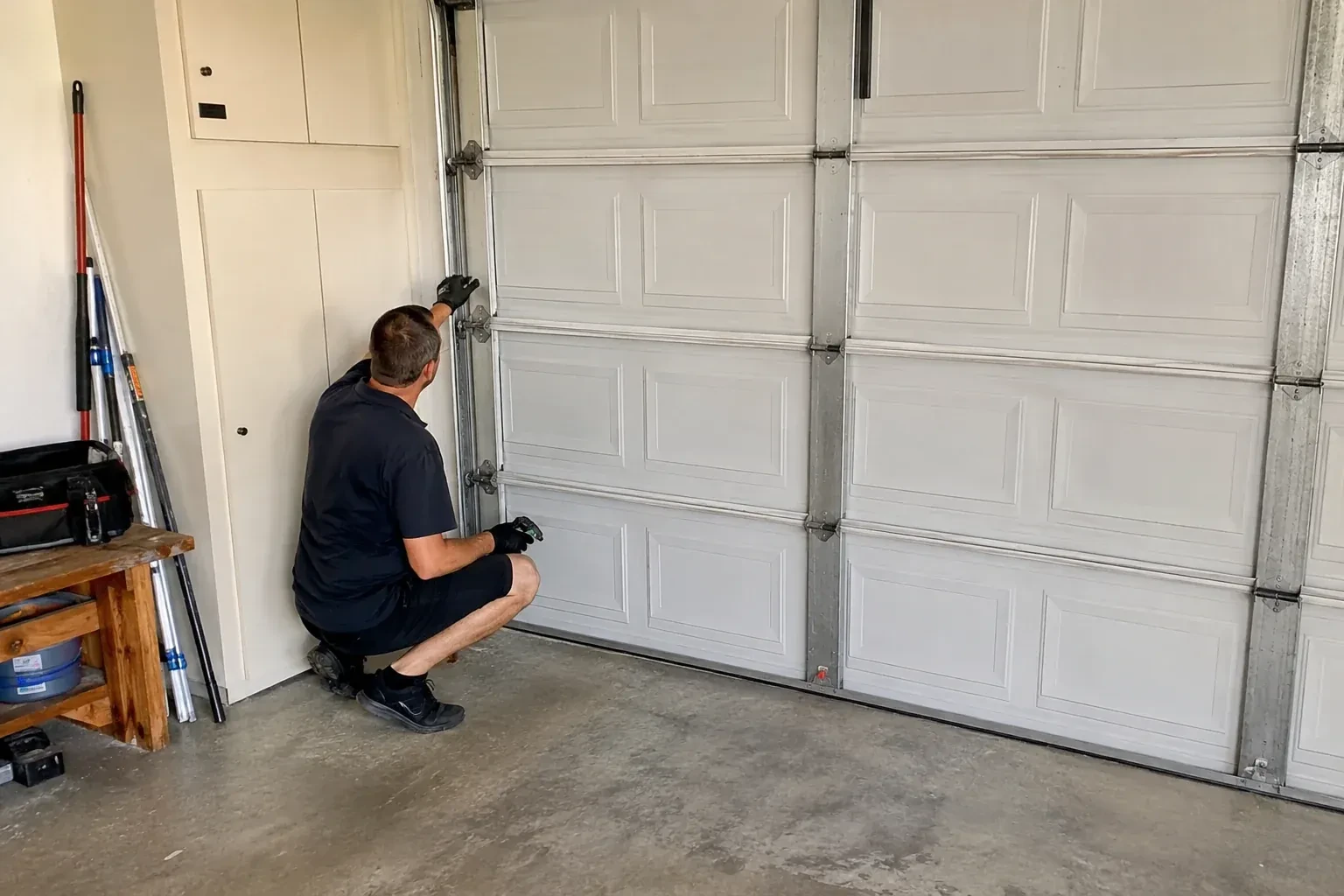
A roller near the top corner is riding on the lip of the track rather than inside it, and the section above leans back a little more each week. The door still moves, but it looks one bump away from coming out altogether.
It is a January morning and the door lifts about a hand's width, groans, and settles back down. When you pull the release and try by hand the door feels far heavier than it used to, and the bottom seal is stuck hard to the slab.
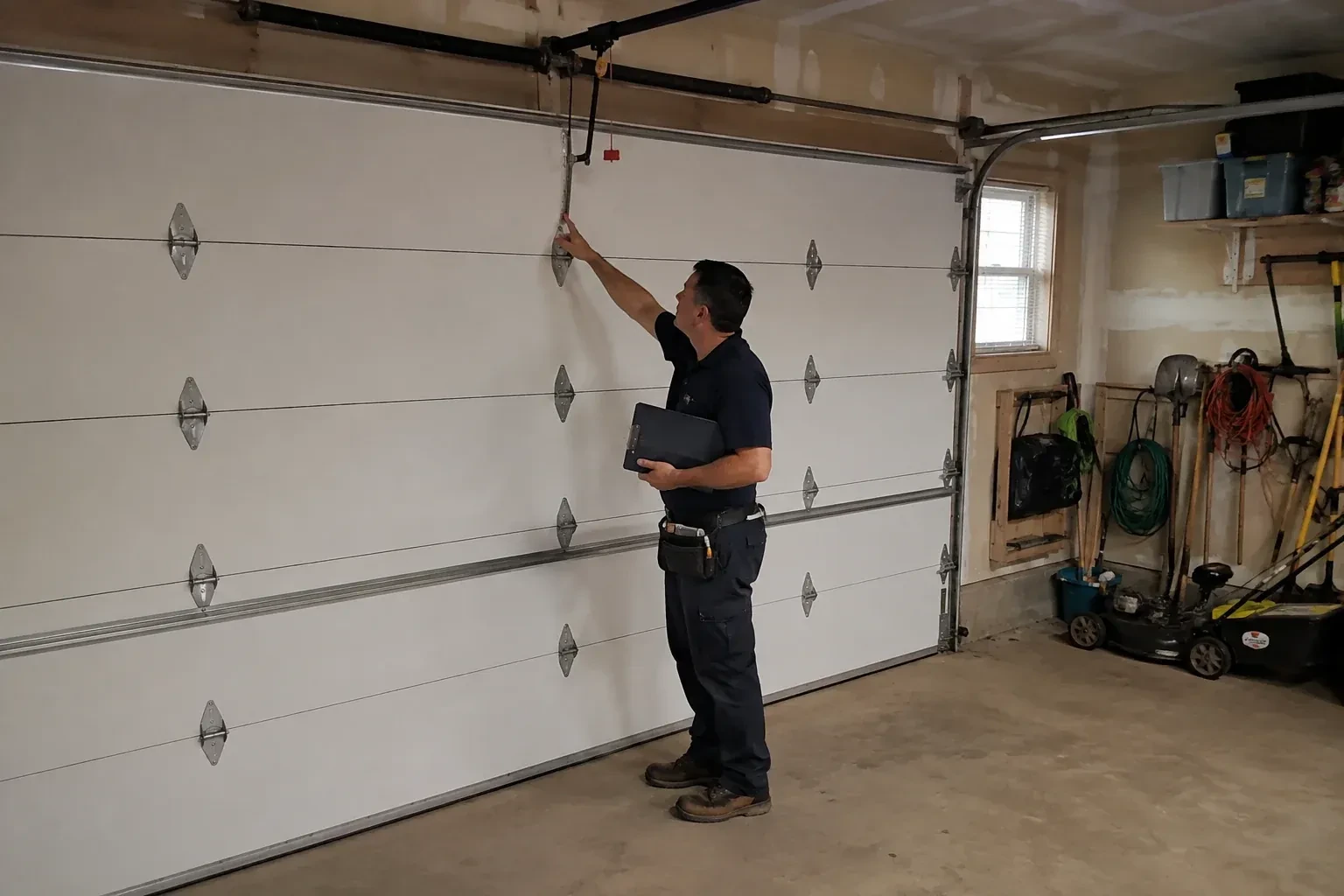
Garage Door Safety Inspection. During the power outage you pulled the red cord and tried to lift the door by hand.
Moving into a new home often means an opener with no remotes, a keypad nobody knows the number for and a wall button that may or may not work. Resetting the unit and pairing fresh devices sorts all three at once.
Installations and upgrades are about the door you want rather than the door you have. This group covers complete replacements, new-build fitting and conversions like high-lift for taller vehicles.
Garage doors here live through freeze-thaw cycles, road salt and humid summers, and they wear accordingly. We look at the spots those conditions attack first: the bottom seal, the cables at the bottom bracket, the roller bearings and the lubrication on the…
Scene 1 of 5
Call and describe the door
On our way
Told before touched
Neat work, neat exit
Room to choose
Step 1 of 5
Call and describe the door
Describe the property, the hardware and what has changed, and the visit starts from what you have seen.
Step 2 of 5
On our way
Single or double, steel or wood, torsion or extension springs, and which opener. If you do not know, that is fine; we sort it out on site.
Step 3 of 5
Told before touched
Nothing is adjusted or replaced until you have heard what we found and agreed with the plan for it.
Step 4 of 5
Neat work, neat exit
New parts fitted cleanly, old ones removed, the floor and door wiped down. The garage is yours again the moment we leave.
Step 5 of 5
Room to choose
We give you the practical picture and step back. Repair now, plan a replacement, or wait and watch: your call.
About 28% of homes in East Gwillimbury were built in 1980 or earlier, according to the 2021 Census.Openers in newer homes usually already have photo-eyes and rolling-code remotes, so the common work is settings rather than upgrades: adjusting force and travel limits, replacing a worn gear or logic board, and adding a keypad, a second remote or a phone controller.
Single-detached houses make up about 81% of homes in East Gwillimbury (2021 Census).Households in detached homes often have several remotes, a keypad and a phone app between family members and their cars. We keep all of them programmed to the opener, replace the ones that have failed, and explain how to add a new one when a car changes hands.
East Gwillimbury Garage Door Services(365) 510-2001 · open 24/7
Can I use the door as soon as the work is finished?
Yes. The visit ends with the door balanced by hand, run through full cycles and the opener reconnected and tested, so it is ready for normal use the moment the technician packs up. There is no settling period for cables. It is a good idea to watch the first few openings yourself to get a sense of how a level, balanced door sounds, so you notice any change later.
Does the new cable have to match the old one exactly?
It has to match the door, which may not be the same thing if the old cable was wrong. Length is set by the door height, the drum profile and the lift type; diameter and construction by the door's weight. A cable that is a little long overlaps on the drum and wears; one that is short leaves the door out of level. The technician measures the door and the drum rather than trusting the old cable.
Should I lubricate the cables?
A light film, yes. A mist of silicone or a lubricant made for garage doors on the cables, especially the lowest stretch near the brackets, sheds moisture and slows rust. Avoid heavy grease or oil, which holds grit and salt against the strands. The springs, hinges, roller bearings and bracket pins take the same product a couple of times a year, and the tracks are simply wiped clean.
How can I tell if my springs are wearing out before they break?
Watch for a door that feels heavier by hand when the opener is released, an opener that strains or slows, a door that drops the last stretch rather than settling, or one that drifts down when stopped halfway. Visually, look for stretched gaps between coils, rust streaks or pitting on the steel, and any sag in the shaft. A balance check when you notice these lets you plan a replacement rather than react to one.