Sound familiar?East Gwillimbury
- The call
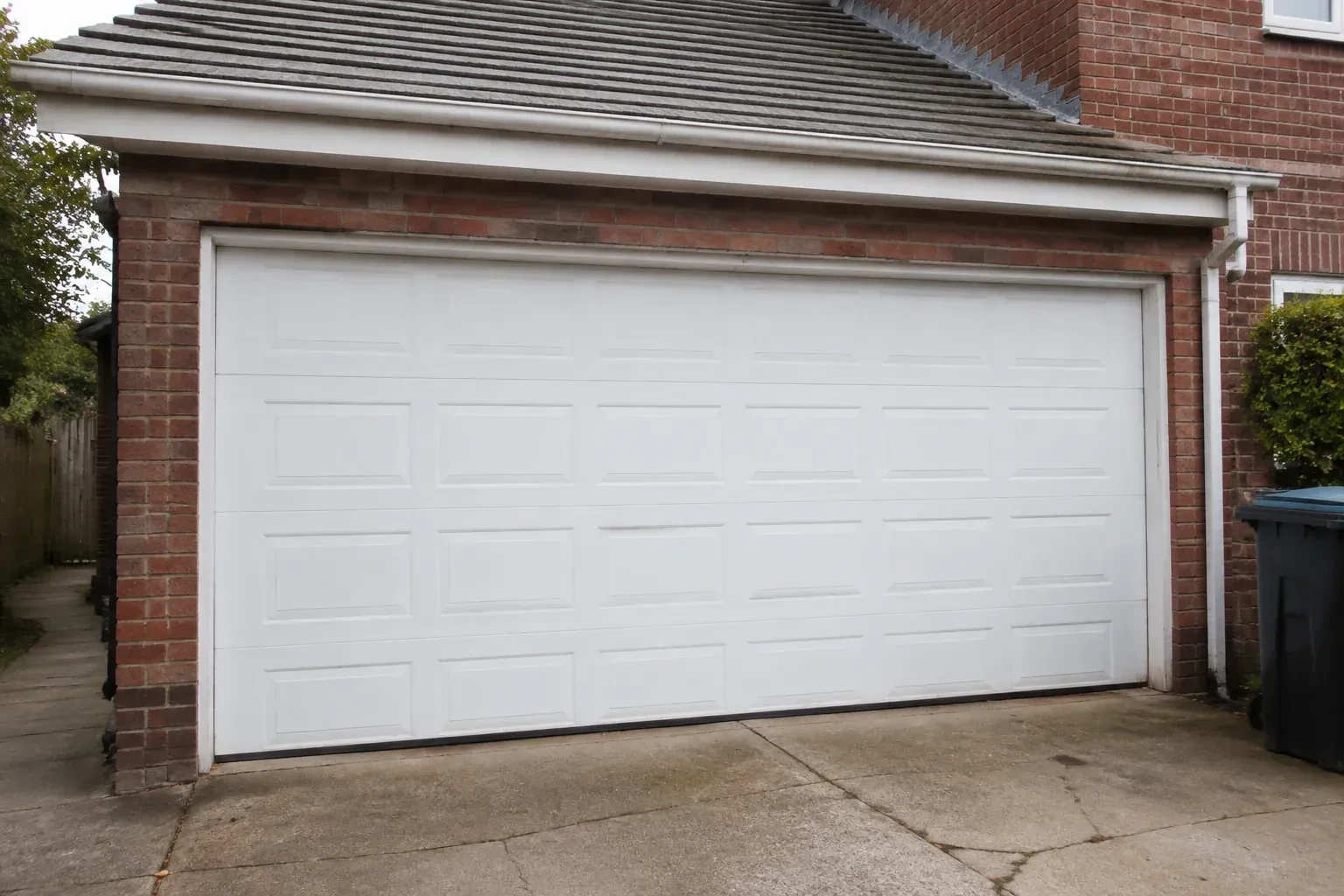
- A forklift clipped the bottom panel while backing through the bay. The section is creased near an end stile, the lower roller rubs the track, and daylight now shows along one corner when the door closes.
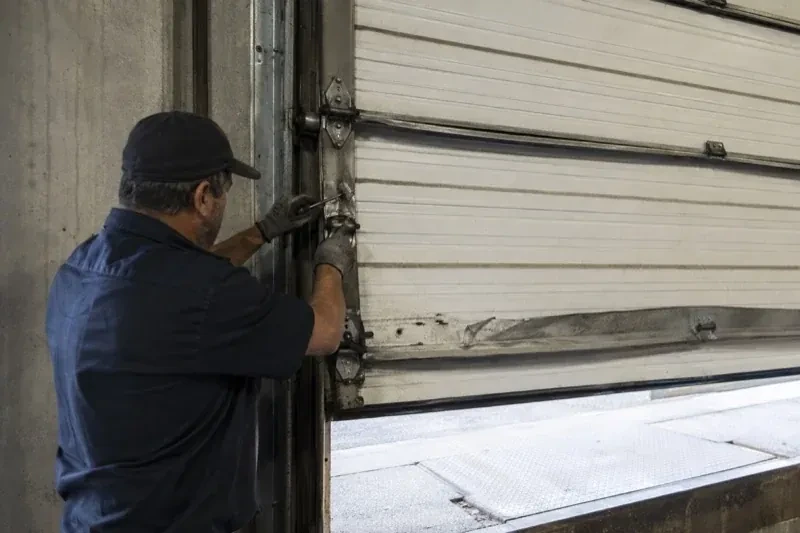
For a facility with several sectional doors, the repair visit can separate one isolated failure from wear shared across similar openings. Door identification, cycle demand and service history help explain why one bay developed loose hinges, tired rollers or spring imbalance first. The affected opening receives the defined repair, while comparable components on adjacent doors can be visually noted for planning. A clear service record then identifies what changed, which settings were tested and what routine observations facility staff can continue between visits.
Sound familiar?East Gwillimbury
Commercial Sectional Door Repair · East Gwillimbury
Scene 1
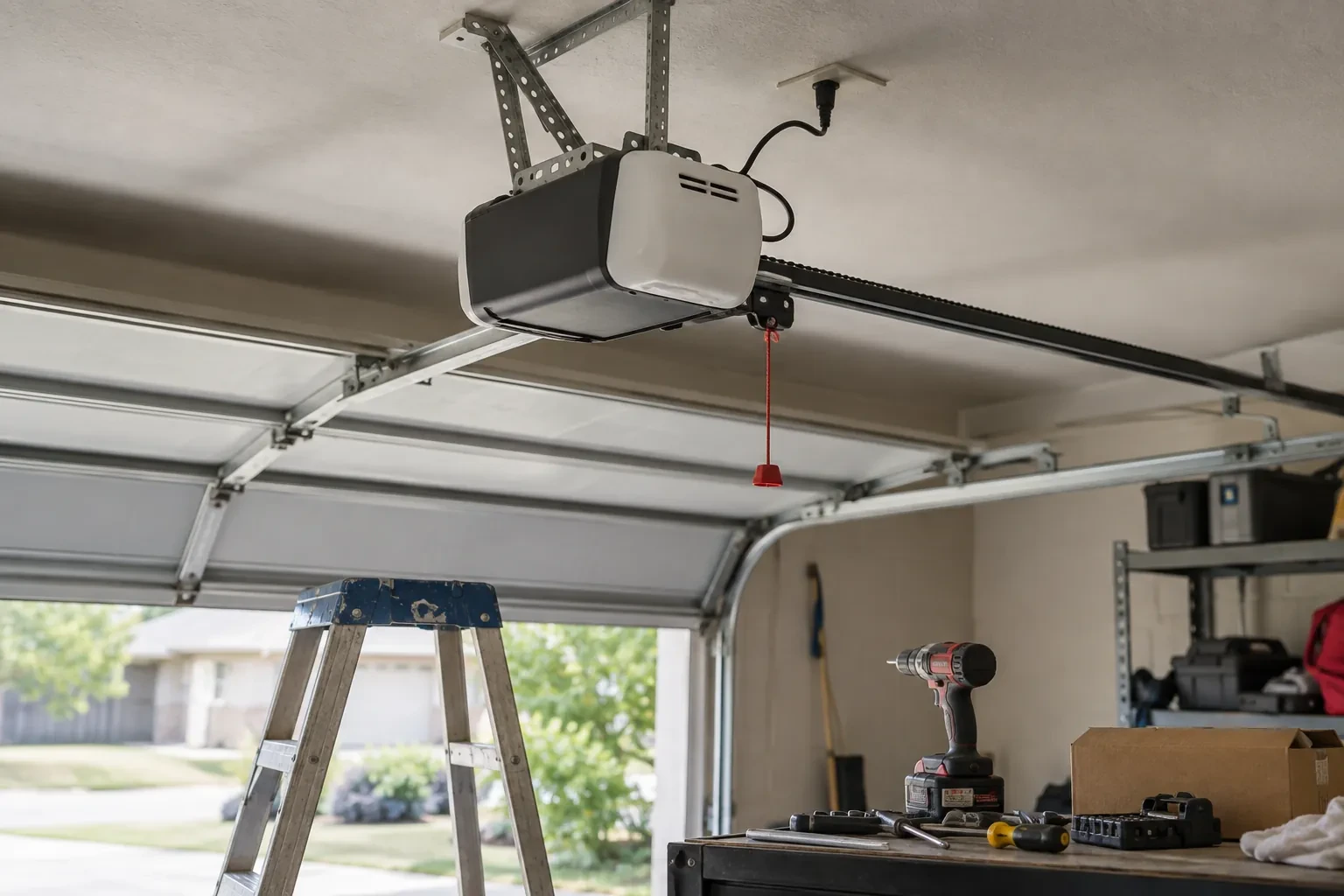
High-lift and vertical-lift systems are identified before components are ordered. The technician records door dimensions, track rise, drum arrangement, shaft location, cable path, spring information and operator connection. Back hangs, sway braces, track splices and end stops are examined because movement overhead can appear as cable trouble below. Cable tension is observed at key transitions, especially near the open position. The resulting measurements guide part selection and show whether the fault came from wear, lost support, changed adjustment or a mismatch within the lift arrangement.
Scene 2
Work begins by separating the bay from normal traffic and placing the door in the safest workable position for the identified fault. Electrical controls are isolated where the task calls for it, and the assembly is held with clamps, locking pliers or rated supports suited to its weight and track type. Stored spring force is managed with proper winding tools and a planned sequence. With movement controlled, hardware can be removed without letting a crooked section, slack cable or broken spring shift the rest of the system.
Scene 3
New rollers, hinges or bearings reduce play at the points that previously knocked or vibrated. Ongoing care means using the lubricant and interval stated for the installed door, applying it to moving pivots and bearings rather than coating the track. Tracks stay clean so rollers can travel on a firm surface without collecting grit. A simple note in the facility log describing the former sound and repaired location gives staff a reference. If a distinct noise returns at the same travel point, that observation makes follow-up assessment more focused.
What shapes the quoteEast Gwillimbury Garage Door Services
FeesSame any hour
Common sources include roller-bearing wear, loose hinges, dry pivots, a rubbing panel, track movement, shaft-bearing wear and operator-chain vibration. The point in the cycle where the sound occurs helps isolate it. A technician watches and listens during controlled travel, looks for play or contact marks, and services the component creating the repeatable noise.
The repair area needs controlled access while the door is supported, tensioned components are handled and operational tests are performed. Facilities can redirect pedestrians, forklifts and vehicles to another route and keep stored goods clear of the tracks and threshold. Once tools and supports are removed, the technician completes the agreed tests before returning the bay to normal traffic.
A reversal can start with a blocked or misaligned photoelectric sensor, a distorted sensing edge, resistance in the track, an incorrect close limit or a control-circuit issue. Inspection covers the clear opening, sensor alignment and wiring, bottom edge and mechanical travel. The source is corrected first, then the protective response is tested through several complete cycles.
YorkOntario
Commercial Sectional Door Repair · Brown Hill, Holland Landing, Mount Albert, Queensville, River Drive Park, Sharon
Every square is one home in a hundred.
On-site assessment
One busy service-bay door has become louder than the matching doors beside it.
(365) 510-2001, open 24/7.
On-site assessment preferred · (365) 510-2001, open 24/7