East Gwillimbury Garage Door ServicesBulletin 3 of 3East Gwillimbury, Ontario
Chain-Drive Opener Repair: step by step
The trolley is the carriage that rides the rail carrying the door arm, and many chain-drive calls end there.
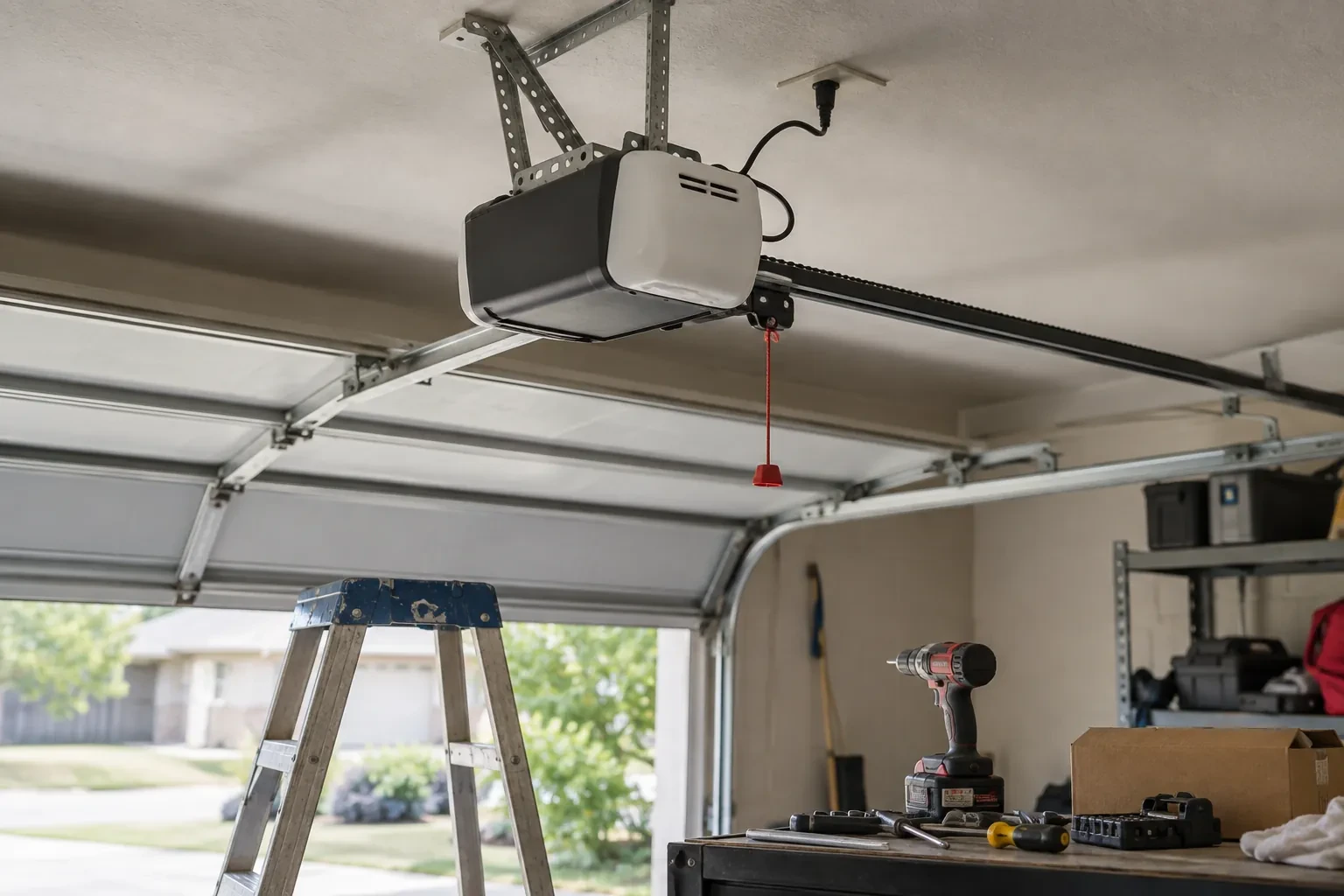
The trolley is the carriage that rides the rail carrying the door arm, and many chain-drive calls end there. If travel limits creep, the trolley runs onto the stop bolt at the end of the rail and the motor hums against it. If the chain was run off the sprocket, the trolley and the motor disagree about where the door is, and the door travels partway no matter how the limits are turned. The technician frees the trolley, puts the chain back in phase with the motor's closed position, resets the limits and confirms the release lever picks the door arm up cleanly.
Lifting the door before touching the drive
Every chain-drive repair starts with the operator unplugged and the red release pulled so the door is free of the trolley. The technician then lifts the door by hand. It should rise with modest effort, stay where it is left about a metre off the floor and settle gently at the top. A door that is heavy in the hands or drifts down is telling the technician that the springs, not the chain, are behind the strain, and that a stripped gear or a jumping chain was the symptom rather than the cause. Sorting the door out first is what gives a repaired drive a long life instead of a second failure.
Setting the tension by the numbers
With the door closed and disconnected, the two nuts on the tensioner shaft at the trolley are used in order. The outer nut, nearest the door, is loosened until the chain droops below the rail, the inner nut is backed off to make room, and then the outer nut is turned to raise the chain until it sits at the height the opener's own manual calls for on that rail shape, measured at the rail's midpoint. The inner nut is tightened against it to lock the setting. Once the door is reconnected and closed some droop appears in the chain; that is normal provided the measurement returns with the door open.
A record of the drive as it is now
Before leaving, the technician writes down what was found and what was fitted: the operator's model and age, whether the gear kit, sprocket, chain, trolley or rail hardware was replaced, the tension figure set, the limit and force positions, and the results of the reversal tests. The manual is hung near the wall control so the model's own instructions are at hand for the monthly tests. This note makes any future call a short conversation, tells a home inspector what has been done, and gives whoever owns the house next a clear picture of what is hanging over the car.